Resources

Frequently Asked Questions

Answers to the most common questions about IBC totes: buying, selling, recycling, cleaning, food safety, shipping, pricing, grades, and regulations.

Free Quote

Request a Quote

Tell us who you are

We have compiled answers to the most common questions our customers ask about IBC totes, our services, and the buying and selling process. If you do not find your answer here, feel free to contact us directly at our Hebron, KY facility (1405 Worldwide Blvd, Hebron, KY 41048).

General IBC Questions

What is an IBC tote?+
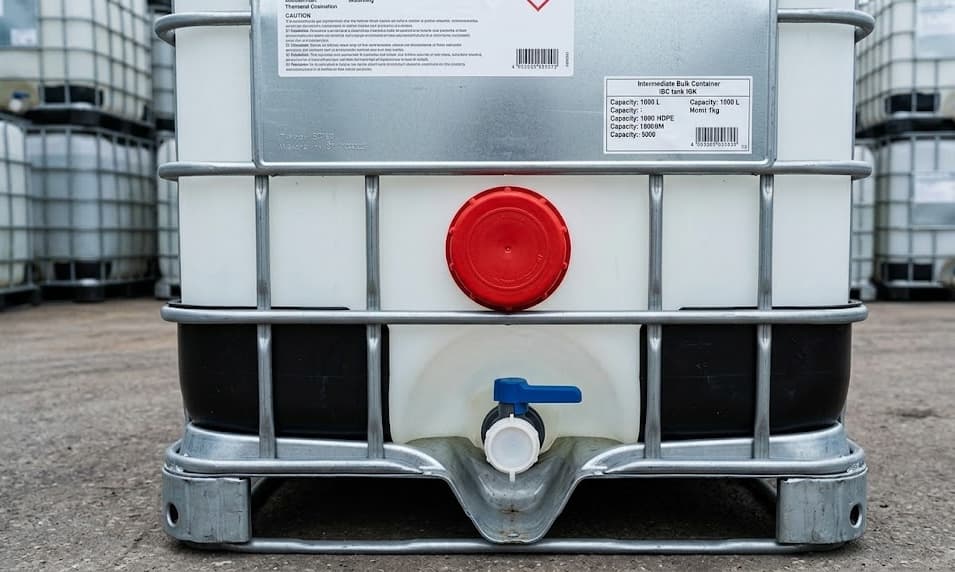
An IBC (Intermediate Bulk Container) tote is a standardized industrial container used for the storage and transport of bulk liquids, granulated materials, and pastes. The most common type is a composite IBC, consisting of a blow-molded HDPE (High-Density Polyethylene) inner bottle enclosed in a galvanized steel cage and mounted on a pallet base. Standard sizes range from 275 gallons (1,040 liters) to 550 gallons (2,082 liters). IBCs are designed to be stackable, forklift-compatible, and reusable.
What sizes of IBCs do you carry?+
IBC Cincinnati stocks the three most common IBC sizes: 275-gallon (1,040 L), 330-gallon (1,249 L), and 550-gallon (2,082 L). We carry all three sizes in new, reconditioned, and used conditions. Our 275-gallon and 330-gallon containers fit standard 40" x 48" pallet jacks and forklifts. For a detailed comparison of dimensions, weights, and specifications, visit our IBC Size Guide.
How long do IBC totes last?+
The lifespan of an IBC depends on its material, usage conditions, and maintenance. HDPE composite IBCs typically last 5-8 years for general industrial use, though they are limited to 5 years from the date of manufacture for hazardous materials transport per UN/DOT regulations. Stainless steel IBCs can last 20+ years with proper care. Each HDPE IBC can typically be reconditioned and reused 5-8 times before the inner bottle needs to be replaced or recycled.
What is the difference between a tote and an IBC?+
In the industry, "IBC tote" and "IBC" are used interchangeably. The word "tote" is simply a colloquial term for the container. You may also hear them called "IBC tanks," "IBC containers," or simply "totes." They all refer to the same type of standardized intermediate bulk container.

Buying IBCs

How much do IBC totes cost?+
Pricing varies by condition, size, grade, and current market supply. As a general guide: used IBCs range from $50-$125, reconditioned IBCs from $100-$250, and new IBCs from $250-$500+ for HDPE composite models. Stainless steel IBCs range from $1,500-$4,000+ new. Volume discounts are available for orders of 10 or more containers. Contact us for current pricing, as rates fluctuate with supply and demand.
What is the difference between new, reconditioned, and used IBCs?+
New IBCs come directly from the manufacturer with a fresh inner bottle, new cage, and new pallet. They are best for pharmaceutical, cosmetic, and first-use food-grade applications. Reconditioned IBCs have been professionally triple-washed, inspected, and restored with new gaskets and valves. They perform at 50-70% of new quality at 40-60% of the cost. Used IBCs are sold as-is with minimal cleaning, suitable for non-food applications like rainwater collection, waste storage, and general industrial use. See our Buying Guide for more detail.
What does "food-grade" mean for an IBC?+
A food-grade IBC is manufactured from FDA-compliant virgin HDPE resin that meets 21 CFR 177.1520 standards for direct food contact. For a reconditioned IBC to be sold as food-grade, it must have previously held only food-grade products, undergone a documented triple-wash cleaning process, and passed visual and olfactory inspection for contaminants. The container must also have intact UN markings showing it was originally manufactured as a food-grade unit. We provide a certificate of cleaning with every food-grade reconditioned IBC.
Can I visit your facility to inspect IBCs before buying?+
Absolutely. We encourage customers to visit our facility at 1405 Worldwide Blvd, Hebron, KY 41048 to inspect inventory in person. We are open Monday through Friday during business hours. Please call ahead to schedule a visit so we can ensure the specific types and sizes you are interested in are available for inspection. We can also send photos and detailed condition reports for customers who cannot visit in person.

Selling Your IBCs

Do you buy used IBC totes?+
Yes, we buy used IBCs in virtually any condition. Whether you have one container or hundreds, we are interested. The price we pay depends on the condition, previous contents, and quantity. IBCs that previously held food-grade products command the highest prices, while containers that held hazardous chemicals may still have value for recycling. Contact us with details about your containers (quantity, condition, previous contents, location) for a quick quote.
Do you offer pickup services?+
Yes. We offer full truckload and LTL (less-than-truckload) pickup services across the Midwest, including Ohio, Kentucky, Indiana, Michigan, Pennsylvania, West Virginia, and Tennessee. For large quantities (typically 40+ containers), we can arrange free pickup within our primary service area. Smaller quantities may have a nominal pickup fee depending on distance. We handle all the logistics, including loading and transportation.

Cleaning & Recycling

How are IBCs cleaned and reconditioned?+
Our reconditioning process follows industry best practices. First, any remaining product is safely removed and disposed of according to regulations. The inner bottle is then triple-washed: an initial hot water rinse, a detergent wash cycle with specialized cleaning agents matched to the previous contents, and a final hot water rinse. After cleaning, the container is inspected for cracks, staining, or odor. The valve and gaskets are replaced, the cage is inspected and repaired if needed, and the pallet is checked for integrity. Finally, the unit is relabeled with reconditioning data. Read more in our IBC Maintenance Tips article.
Can all IBCs be recycled?+
Yes, virtually every component of an IBC can be recycled. The HDPE inner bottle is granulated into flakes and melted into recycled pellets (resin code #2). The galvanized steel cage is compressed and sent to steel recycling facilities. Wood pallets are repaired for reuse or chipped into mulch and biomass fuel. Plastic pallets are recycled alongside the HDPE bottle. Even the rubber gaskets and plastic valve components are separated for recycling. At IBC Cincinnati, we achieve a 98% landfill diversion rate across all IBC components.
What happens to an IBC that previously held hazardous materials?+
IBCs that previously held hazardous materials require special handling. If the container can be safely cleaned and decontaminated, it may be reconditioned for non-food industrial use. If the previous contents have permanently compromised the inner bottle (through absorption, staining, or chemical degradation), the bottle is removed and recycled separately under controlled conditions. The steel cage and pallet can typically still be reused or recycled. All hazardous waste generated during the cleaning process is disposed of in accordance with EPA and state environmental regulations.

Shipping & Logistics

How many IBCs fit on a truck?+
A standard 53-foot dry van trailer can accommodate approximately 56 empty 275-gallon IBCs (single-stacked) or up to 80 with careful loading and stacking of empty containers. For full (loaded) 275-gallon IBCs, the practical limit is typically 20-24 containers per truckload due to weight restrictions (80,000 lbs gross vehicle weight limit in most states). The 330-gallon containers fit similarly due to their same pallet footprint, though the taller height limits stacking for loaded units.
Do you deliver IBCs?+
Yes, we offer delivery services throughout the Midwest and can arrange nationwide shipping for larger orders. Local delivery within the greater Cincinnati/Northern Kentucky area is available with short lead times, often next-day. Regional delivery (within a 300-mile radius of our Hebron, KY facility) typically takes 2-5 business days. For orders of 40+ containers, delivery may be included in the purchase price. Contact us for a shipping quote based on your location and quantity.

Regulations & Safety

What UN/DOT regulations apply to IBC totes?+
IBCs used for transporting hazardous materials must comply with UN Recommendations on the Transport of Dangerous Goods and US DOT 49 CFR regulations. Key requirements include: the IBC must carry a valid UN marking (such as 31HA1 for composite IBCs), the manufacture date must be within 5 years for composite containers, the container must pass periodic inspection every 2.5 years, and the packing group rating must match or exceed the hazard level of the contents. For non-hazardous materials, these regulations do not apply, though following them voluntarily is considered best practice. See our Regulations Guide for complete details.
Are your reconditioned IBCs safe for food storage?+
Our food-grade reconditioned IBCs are safe for food and beverage contact when used as intended. Every food-grade unit we sell has been verified to have previously held only food-grade products, has been triple-washed with FDA-compliant cleaning agents, and has passed a thorough inspection for contaminants, odors, and physical damage. We provide a certificate of cleaning with each food-grade container. However, we always recommend that customers conduct their own quality assessment based on their specific product requirements and internal food safety standards.
Can I use an IBC for drinking water storage?+
While food-grade HDPE IBCs are made from FDA-approved materials that are safe for food contact, we do not specifically recommend used or reconditioned IBCs for long-term potable (drinking) water storage. The difficulty in verifying complete decontamination, the potential for biofilm formation in previously used containers, and the lack of NSF 61 certification for drinking water contact make new, purpose-built water storage tanks a safer choice for this specific application. For non-potable water uses such as irrigation, car washing, or emergency flushing, food-grade used IBCs are a cost-effective solution.

Pricing & Orders

How is IBC pricing determined?+
IBC pricing is influenced by several factors: the condition (new, reconditioned, or used), the size (275, 330, or 550 gallon), the material (HDPE composite vs. stainless steel), the grade (food-grade, clean industrial, or general purpose), the previous contents (food-grade IBCs command a premium), the pallet type (plastic pallets cost more than wood), and current market supply and demand. Prices fluctuate seasonally, with the lowest prices typically available in winter (December-February) and the highest in summer (June-August) when agricultural demand peaks. Volume discounts are available for orders of 10+ units. Contact IBC Cincinnati for current pricing — we provide transparent, no-surprise quotes.
What are your typical lead times?+
For in-stock items, we can typically fulfill orders within 1-3 business days for local pickup and 3-5 business days for delivery within our primary service area (Ohio, Kentucky, Indiana, and surrounding states). Large orders of 50+ containers may require 1-2 weeks for preparation and staging. Specialty requests — such as specific previous contents, specific pallet types, or 550-gallon units — may take 2-4 weeks depending on inventory. New IBCs ordered from manufacturers typically have a 4-6 week lead time. We recommend ordering at least 3 weeks in advance for large orders and 4-6 weeks in advance for summer season orders.
Is there a minimum order quantity?+
No. IBC Cincinnati sells individual containers as well as full truckloads. There is no minimum order requirement. However, volume discounts begin at 10 containers, with progressively better pricing at 25, 50, and full truckload (56+ units) quantities. For customers who need just 1-3 IBCs, visiting our Hebron, KY facility for direct pickup is the most cost-effective option, as it eliminates delivery charges. For detailed pricing tiers, see our Buying Guide.

International Shipping & Customs

Do you ship IBCs internationally?+
IBC Cincinnati primarily serves the domestic US market, with our core service area covering the Midwest and Eastern United States. For international shipments, we can coordinate with freight forwarders to arrange export shipping to Canada, Mexico, and overseas destinations. International orders typically require a minimum of 20 containers (one shipping container load) to be cost-effective. All IBCs shipped internationally include ISPM-15 compliant wood pallets (heat-treated) to meet international phytosanitary requirements. For export to the European Union, we can provide containers that meet EU packaging waste directive requirements. Contact our team for an international shipping quote.
What customs documentation is needed for importing/exporting IBCs?+
Exporting IBCs from the United States requires a commercial invoice, packing list, bill of lading, and (for hazmat containers) a dangerous goods declaration. If the IBC contains product, additional documentation including Safety Data Sheets (SDS) and export licenses may be required depending on the product. For empty IBCs being exported, the HTS (Harmonized Tariff Schedule) code is typically 3923.90 for plastic containers or 7310.29 for steel containers. Wood pallets must carry the ISPM-15 stamp verifying heat treatment. For imports, US Customs and Border Protection may require proof of origin and compliance with US DOT standards if the containers will be used for hazmat transport domestically.

Warranty & Insurance

Do IBCs come with a warranty?+
New IBCs from manufacturers typically carry a 1-2 year warranty against manufacturing defects in the bottle, cage, and valve. This covers defects in materials and workmanship but does not cover damage from improper use, overloading, UV exposure, or chemical incompatibility. Reconditioned IBCs from IBC Cincinnati are sold with a 30-day satisfaction guarantee — if the container does not meet the described grade and condition, we will replace it or refund your purchase. Used IBCs are sold as-is but are verified leak-free at the time of sale. For long-term protection, we recommend inspecting containers regularly using the guidelines in our Maintenance Tips article.
What insurance do I need for storing and transporting IBCs?+
Insurance requirements vary based on what your IBCs contain and how they are used. For general storage, your standard commercial property insurance should cover IBC inventory as business personal property. For transporting hazardous materials in IBCs, you will need commercial auto liability insurance with hazmat endorsement (minimum $1 million, often $5 million). For environmental liability (spills, contamination), consider an Environmental Impairment Liability (EIL) or Pollution Legal Liability (PLL) policy. If you store large quantities of flammable or hazardous materials in IBCs, your insurer may require compliance with NFPA 30 (flammable liquids code) and may adjust premiums based on your containment and fire protection systems. Always disclose your IBC operations to your insurance broker to ensure adequate coverage.

Food Safety, Stacking & Disposal

How do I verify that an IBC is truly food-grade?+
A genuine food-grade IBC must meet three criteria: (1) the inner bottle must be manufactured from virgin FDA-compliant HDPE resin meeting 21 CFR 177.1520, which will be indicated by the manufacturer's markings on the container; (2) the container must have only previously held food-grade products, which should be verifiable through the seller's documentation; and (3) the container must be properly cleaned with food-safe cleaning agents and free from contamination, odor, and residue. At IBC Cincinnati, every food-grade reconditioned IBC comes with a certificate of cleaning that documents the cleaning process, previous contents, and inspection results. We recommend also conducting your own visual and olfactory inspection before first use, and following your company's HACCP or food safety plan requirements.
How many IBCs can I safely stack?+
Full IBCs with intact cages can be stacked 2 high (one on top of another) when the cage is in good condition and the cage corners are square. Never stack full IBCs 3 high. Empty IBCs with good cages can be stacked up to 3 high. Never stack containers with damaged, bent, or corroded cages. When stacking, ensure the upper container's pallet sits squarely on the lower container's cage corners. Do not mix sizes when stacking (e.g., do not stack a 550-gallon on a 275-gallon). During transport, stacked IBCs must be properly secured with straps or blocking to prevent shifting. For detailed stacking charts and safety guidelines, see our Size Guide.
How do I properly dispose of an IBC at end of life?+
The best option is always to recycle rather than dispose of end-of-life IBCs. Contact IBC Cincinnati — we buy used IBCs in virtually any condition, and containers that cannot be reconditioned are broken down and recycled component by component (HDPE to pellets, steel to scrap, wood to mulch). If the IBC previously held hazardous materials, it may itself be classified as hazardous waste under RCRA regulations until properly decontaminated. Never send a hazmat-contaminated IBC to a regular landfill or scrap yard. If you must dispose of a non-hazardous IBC locally, check with your municipal waste authority — many accept disassembled IBC components (the HDPE bottle can go with #2 plastic recycling, the steel cage with metal recycling, and the wood pallet with pallet recyclers or wood waste). Visit our Environmental Impact page to learn more about responsible end-of-life options.

Pro Tip: Keep a Container Log

Maintaining a detailed container tracking log is one of the best practices you can adopt for IBC management. For each container, record the serial number (stamped on the UN marking plate), the date received, the source (seller), the previous contents, the date placed in service, what you fill it with, cleaning dates, inspection dates, and any repairs performed. This log will help you stay compliant with DOT periodic inspection requirements, support FDA traceability mandates for food-grade containers, and enable you to make data-driven decisions about when to retire containers. Many companies use a simple spreadsheet, but barcode or QR code scanning systems integrated with inventory management software are available for operations handling 100+ IBCs.

Still Have Questions?

Our team is happy to answer any questions not covered here. Reach out by phone, email, or visit us at our Hebron, KY facility for personalized assistance.