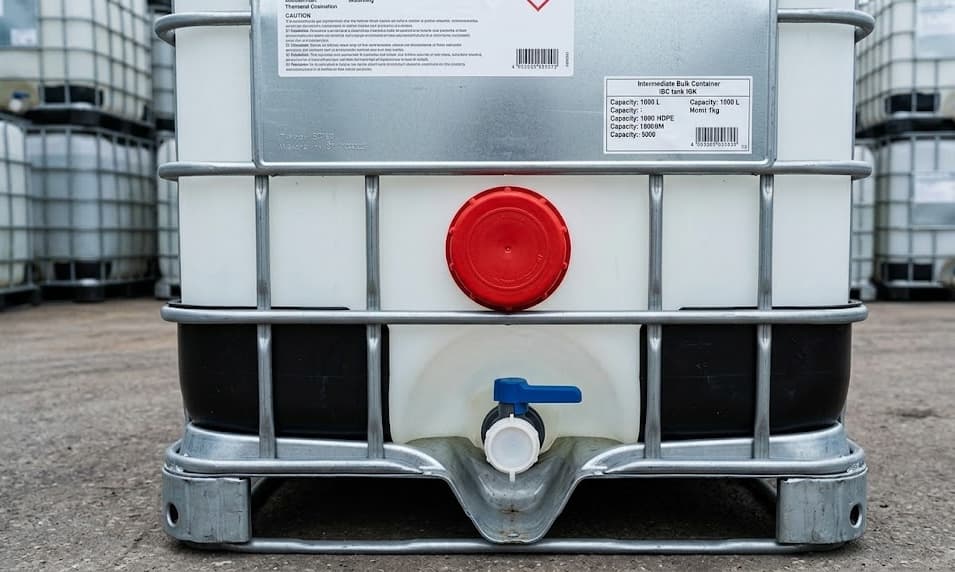
IBC Types & Materials
Explore every IBC type and material: HDPE composite, stainless steel, carbon steel, polyethylene, cage and pallet materials, liner types, and UN/DOT classifications.
Not all IBCs are created equal. The type of container and the materials it is made from directly impact its performance, chemical compatibility, lifespan, and regulatory compliance. Understanding these differences is essential for selecting the right IBC for your application. At IBC Cincinnati, located at 1405 Worldwide Blvd, Hebron, KY 41048, we stock a wide range of IBC types and can help you find the exact container you need.
HDPE Composite IBCs
HDPE (High-Density Polyethylene) composite IBCs are by far the most common type of intermediate bulk container in use today, accounting for over 80% of all IBCs worldwide. The term "composite" refers to the combination of a blow-molded HDPE inner bottle with an external galvanized steel cage and a pallet base. This design combines the chemical resistance of plastic with the structural strength of steel.
HDPE is classified as resin identification code #2 and is one of the most chemically resistant plastics available. It is compatible with most acids (up to moderate concentrations), bases, alcohols, and many organic solvents. However, HDPE is not suitable for strong oxidizing agents, aromatic hydrocarbons (like benzene or toluene), or halogenated solvents (like chloroform) at high concentrations. The wall thickness of the inner bottle typically ranges from 2mm to 4mm depending on the manufacturer and the intended service rating.
FDA-compliant HDPE bottles are produced using virgin resin that meets 21 CFR 177.1520 requirements for direct food contact. These food-grade bottles are white in color and free from any recycled content. Non-food-grade bottles may be produced from recycled HDPE and are typically off-white or slightly gray in appearance.
Stainless Steel IBCs
Stainless steel IBCs are premium containers built entirely from food-grade stainless steel — typically 304 or 316 grade. 304 stainless steel offers excellent corrosion resistance for most applications, while 316 stainless steel (also called "marine grade") adds molybdenum for superior resistance to chlorides and aggressive chemicals. These containers are the gold standard for pharmaceutical, cosmetic, and high-purity chemical applications.
The interior surface of stainless steel IBCs is often electropolished to a surface finish of 20-30 Ra (roughness average in microinches), which minimizes bacterial adhesion and makes cleaning easier. Some pharmaceutical applications require an even smoother finish of 15 Ra or less. Stainless steel IBCs can be steam-sterilized (autoclaved) at temperatures up to 250°F (121°C), a capability that plastic containers simply cannot match.
While significantly more expensive upfront ($1,500-$4,000+ new), stainless steel IBCs have a 20+ year lifespan and retain high resale value. They are also 100% recyclable with significant scrap value, making them the most sustainable option over a full lifecycle analysis.
Carbon Steel IBCs
Carbon steel IBCs are all-metal containers designed for the most demanding applications, including the storage and transport of flammable liquids, high-temperature materials, and Packing Group I hazardous substances. They are typically constructed from 14-gauge or 12-gauge carbon steel with interior linings (epoxy, phenolic, or polyethylene) to prevent corrosion and contamination.
Carbon steel IBCs are less common than HDPE composite or stainless steel models but fill an important niche for products that require all-metal construction for regulatory compliance or safety reasons. They are the only IBC type approved for Packing Group I hazardous materials — the highest danger classification. However, they are heavier, more expensive, and harder to clean than composite alternatives.
Cage & Pallet Materials
Cage Materials
The cage (or frame) of a composite IBC is constructed from welded carbon steel wire, typically 3/16" to 1/4" diameter. The steel is protected from corrosion through one of several coating methods:
- Hot-dip galvanized: The cage is submerged in molten zinc, providing a thick, durable coating that lasts 15-20 years. This is the most durable and common coating for outdoor use.
- Electro-galvanized: A thinner zinc coating applied through electroplating. Less durable than hot-dip but offers a smoother finish. Common on indoor-use containers.
- Powder-coated: An epoxy or polyester powder finish baked onto the steel. Available in various colors for brand identification. Less common but popular for consumer-facing products.
Pallet Materials
The pallet base supports the entire weight of the container and its contents and must be compatible with forklifts, pallet jacks, and stacking systems:
- Wood pallets: Most common and least expensive. Made from hardwood, heat-treated (ISPM-15 stamp) for international shipping. Susceptible to moisture, pests, and rot. Typical lifespan: 3-5 uses.
- Plastic (HDPE) pallets: Hygienic, chemical-resistant, and long-lasting (10+ years). Preferred for food-grade and clean-room applications. Approximately 20% heavier than wood but far more durable.
- Steel pallets: Maximum strength and durability. Used primarily with stainless steel IBCs in heavy-duty applications. Fully recyclable. Heaviest option, adding 30-50 lbs to the container.
- Composite pallets: A hybrid of wood and plastic or fiberglass. Offers a balance of cost and durability. Less common but gaining market share in specialty applications.
Liner Types
IBC liners are disposable or reusable bags that fit inside the inner bottle of a composite IBC. They create a barrier between the container wall and the product, allowing a single IBC to be used for different products without cross-contamination. Liners are essential for applications where cleaning between batches is impractical or where product purity is critical.
LDPE (Low-Density Polyethylene)
The most common liner material. Good chemical resistance, flexible, and inexpensive. Suitable for water-based products, mild chemicals, and food-grade applications. Wall thickness: 4-8 mil.
Nylon / Multi-Layer
Provides superior barrier properties against oxygen and moisture transmission. Ideal for oxygen-sensitive products, flavors, and fragrances. More expensive but extends product shelf life significantly.
Foil (Aluminum)
The highest barrier option, blocking virtually all light, moisture, and oxygen. Used for pharmaceutical and high-value chemical applications. Most expensive liner type but provides the ultimate product protection.
UN/DOT Classifications & Hazmat Ratings
The United Nations (UN) and the US Department of Transportation (DOT) maintain parallel but harmonized classification systems for containers used to transport dangerous goods. Every IBC intended for hazmat service must carry a UN marking that encodes its type, material, certification level, and test results.
| UN Code | Type | Packing Groups | Typical Use |
|---|---|---|---|
| 31HA1 | Composite IBC (HDPE + steel cage) | II, III | Most common; chemicals, food, agricultural |
| 31A | Steel IBC (all metal) | I, II, III | Flammables, strong oxidizers, PG I hazmat |
| 31H1 | Rigid plastic IBC (no cage) | II, III | Light-duty, non-stackable applications |
| 31HZ1 | Composite IBC (HDPE + plastic frame) | II, III | Lightweight, single-use or limited reuse |
| 21HA1 | Composite IBC for solids | II, III | Granulated materials, powders, dry goods |
When purchasing IBCs for hazmat transport, always verify the UN marking and ensure the manufacture date is within the 5-year service life limit for composite containers. Our team at IBC Cincinnati can help you identify the correct UN classification for your specific product and application. Learn more in our IBC Regulations Guide.
Material Degradation Timelines
All IBC materials degrade over time. Understanding the rate and nature of degradation for each material type is essential for planning replacement cycles and avoiding container failures. The following table summarizes expected degradation timelines under typical conditions.
| Material | Degradation Type | Indoor (Controlled) | Outdoor (Covered) | Outdoor (Exposed) | Signs of Degradation |
|---|---|---|---|---|---|
| HDPE bottle | UV photo-oxidation | 8-12 years | 5-8 years | 2-4 years | Yellowing, brittleness, chalking, micro-cracking |
| HDPE bottle | Chemical absorption | Varies by chemical | Varies by chemical | Varies by chemical | Swelling, discoloration, persistent odor, softening |
| Galvanized steel cage | Zinc coating depletion | 20-30 years | 15-20 years | 8-15 years | White rust (zinc oxide), then red rust (iron oxide) |
| Stainless steel 304 | Pitting / crevice corrosion | 25+ years | 20+ years | 15-20 years | Pitting, discoloration near welds, tea staining |
| Stainless steel 316 | Chloride stress corrosion | 30+ years | 25+ years | 20+ years | Minimal — superior chloride resistance |
| Wood pallet | Rot / pest damage | 5-8 years | 3-5 years | 1-3 years | Softness, dark discoloration, pest tunnels, splitting |
| HDPE pallet | UV / impact fatigue | 15-20 years | 10-15 years | 5-8 years | Surface chalking, stress fractures at fork entry points |
Pro Tip: Extend HDPE Life by 50%+
The single most impactful thing you can do to extend the life of an HDPE composite IBC is to store it indoors or under a UV-blocking cover. Moving a container from direct outdoor exposure to covered storage can effectively double its useful lifespan. For containers that must remain outdoors, invest in a $25-$50 UV-resistant IBC cover — it will pay for itself many times over in extended container life. Learn more on our IBC Maintenance Tips page.
UV Resistance Ratings
UV resistance varies significantly between IBC materials and even between different HDPE formulations. UV stabilizers (typically Hindered Amine Light Stabilizers, or HALS) are added to HDPE during manufacturing to slow photo-oxidation, but their effectiveness is finite.
| Material / Feature | UV Resistance Rating | Outdoor Exposure Limit | Notes |
|---|---|---|---|
| Standard white HDPE | Low-Moderate | 12-24 months | Most common; white pigment provides some UV reflection |
| UV-stabilized HDPE (HALS added) | Moderate-High | 24-48 months | Premium bottles with additional UV stabilizer package |
| Black HDPE (carbon black pigmented) | High | 36-60 months | Carbon black absorbs UV; not suitable for food-grade |
| Stainless steel (304/316) | Excellent (immune) | No UV degradation | Metal is unaffected by UV radiation |
| Galvanized steel cage | Excellent (immune) | No UV degradation | UV does not affect steel; moisture and chemicals are the concern |
| IBC UV cover (polyester/PP) | Provides UV-400 protection | Extends HDPE life 2-3x | Aftermarket accessory; $25-$50; replace every 2-3 years |
Chemical Resistance Chart
Chemical compatibility is one of the most critical factors when selecting an IBC material type. Using the wrong container material for a specific chemical can result in container failure, product contamination, or dangerous reactions. This chart provides a general guide — always verify compatibility with the chemical manufacturer's Safety Data Sheet (SDS) for your specific concentration and temperature.
| Chemical / Substance | HDPE | Stainless Steel 304 | Stainless Steel 316 | Carbon Steel (lined) |
|---|---|---|---|---|
| Water (potable) | Excellent | Excellent | Excellent | Excellent |
| Hydrochloric acid (up to 37%) | Good | Not recommended | Limited | With proper lining |
| Sulfuric acid (up to 70%) | Good | Limited (<50%) | Good (<70%) | Good (lined) |
| Sodium hydroxide (caustic soda) | Excellent | Good | Good | Good (lined) |
| Acetone | Limited (swelling) | Excellent | Excellent | Good (lined) |
| Toluene / benzene | Not recommended | Excellent | Excellent | Good (lined) |
| Bleach (sodium hypochlorite) | Good (<12%) | Limited (pitting risk) | Good | Limited |
| Diesel fuel / gasoline | Limited (permeation) | Excellent | Excellent | Excellent |
| Ethanol / isopropanol | Good | Excellent | Excellent | Good |
| Vegetable / mineral oil | Excellent | Excellent | Excellent | Excellent |
| Hydrogen peroxide (up to 50%) | Good | Good | Excellent | Limited |
| Phosphoric acid | Excellent | Good | Excellent | Good (lined) |
Legend: Excellent/Good = suitable for long-term storage. Limited = acceptable for short-term or low concentrations; verify with SDS. Not recommended = material may fail or contaminate product. Always test with actual product at actual concentration and temperature before committing to a full order. IBC Cincinnati can help you select the right material for your specific chemical — contact us for guidance.
Wall Thickness Standards
The wall thickness of an IBC inner bottle directly impacts its structural integrity, chemical resistance, permeation resistance, and service life. Thicker walls provide better protection but add weight and cost. Different manufacturers and IBC types use different wall thickness specifications.
| IBC Type | Wall Thickness Range | Typical Standard | Minimum (UN-rated) | Performance Impact |
|---|---|---|---|---|
| HDPE composite (275 gal) | 2.0 - 4.0 mm | 3.0 mm | 2.0 mm (PG III) | Thicker = better drop test, chemical resistance |
| HDPE composite (330 gal) | 2.5 - 4.5 mm | 3.5 mm | 2.5 mm (PG III) | Higher volume requires thicker walls for hydrostatic pressure |
| HDPE composite (550 gal) | 3.5 - 5.0 mm | 4.0 mm | 3.0 mm (PG III) | Must support significantly higher weight column |
| Stainless steel 304 | 1.2 - 2.0 mm | 1.5 mm | 1.2 mm | Steel strength allows thinner walls than HDPE |
| Carbon steel (with lining) | 1.5 - 3.0 mm | 2.0 mm | 1.5 mm (PG I capable) | Thickest gauge rated for highest hazard level |
Did You Know?
Wall thickness is not uniform across the entire HDPE bottle. Due to the blow-molding process, the corners and bottom of the bottle are typically 20-30% thinner than the side walls. This is why drop damage most often occurs at the bottom corners of the inner bottle, and why the bottom of the bottle is the first area to check during inspection. Premium manufacturers like Schutz and Mauser use advanced blow-molding techniques (including 3D parison control) to achieve more uniform wall thickness distribution.
Types & Materials FAQ
Can I use an HDPE IBC for hot liquids?+
What is the difference between 304 and 316 stainless steel?+
Can I get an IBC with a custom liner material?+
How do I know if my HDPE bottle needs to be replaced?+
Is there a fire rating difference between HDPE and steel IBCs?+
Need a Specific IBC Type?
IBC Cincinnati stocks HDPE composite, stainless steel, and specialty IBCs in all major sizes. Whether you need food-grade, hazmat-rated, or general-purpose containers, we have the inventory and expertise to match your requirements.