Industry Solutions

Industries We Serve

From food processing plants to construction sites, IBC totes are the backbone of bulk liquid storage and transport across dozens of industries.

Free Quote

Request a Quote

Tell us who you are

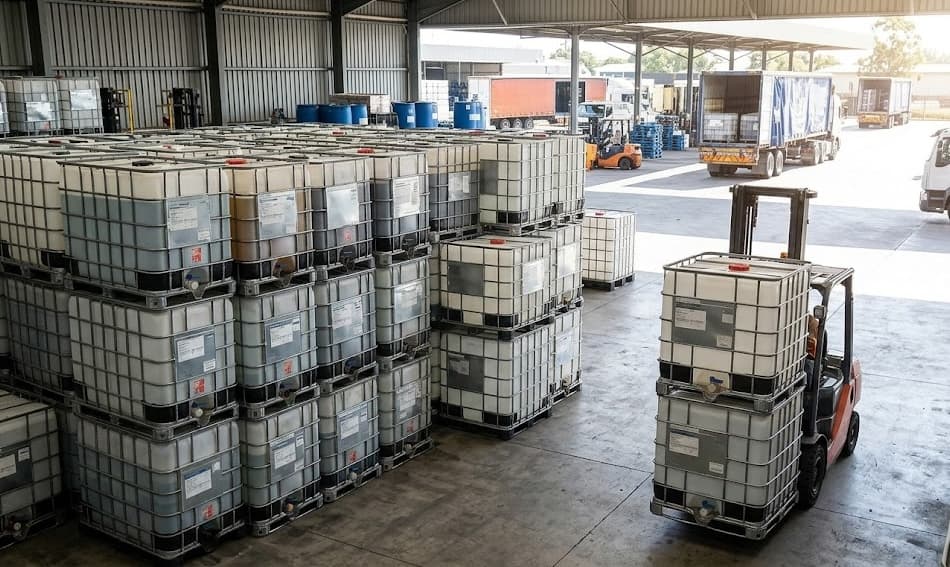
IBC totes serving diverse industries across the Midwest

IBC Market Size by Industry

The global intermediate bulk container market was valued at $3.29 billion in 2024 and is projected to reach $4.87 billion by 2030, growing at a CAGR of 6.8%. Here is how demand breaks down across the industries we serve.

IndustryMarket ShareEst. Market Value (2024)Projected CAGRIBC Volume (US, Annual)
Food & Beverage28%$921M7.4%4.2M units
Chemical Manufacturing24%$790M6.2%3.6M units
Pharmaceuticals14%$461M8.1%2.1M units
Agriculture12%$395M5.9%1.8M units
Automotive8%$263M5.5%1.2M units
Construction6%$197M6.8%900K units
Water Treatment5%$165M7.0%750K units
Cosmetics & Personal Care3%$99M8.5%450K units

Did You Know? The food and beverage industry alone accounts for over 4.2 million IBC units used annually in the United States. That is enough containers to fill more than 1.1 billion gallons of liquid ingredients every year.

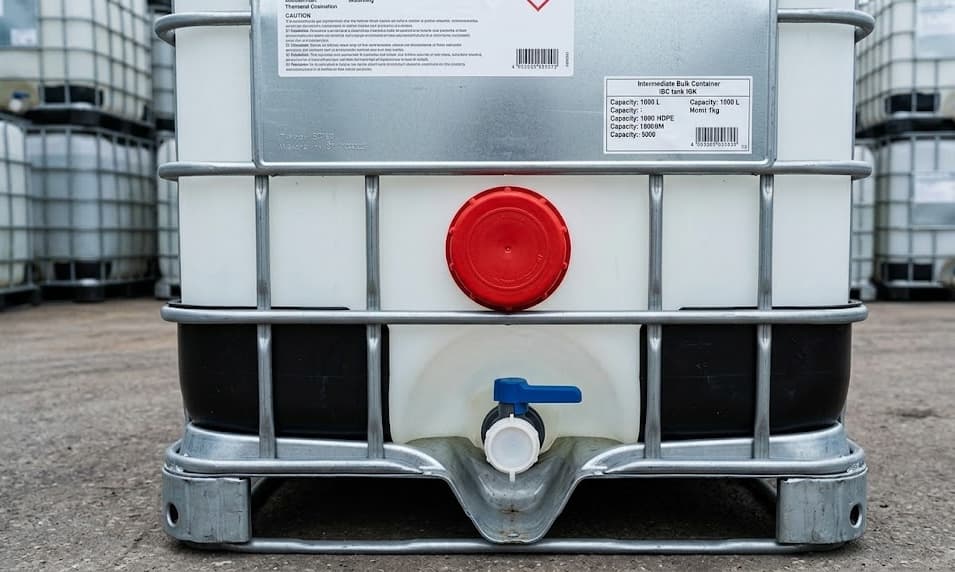
IBC containers used across food, chemical, and agricultural industries

Solutions for Every Sector

Whether you work in food processing, chemical manufacturing, agriculture, or construction, we have the right IBC configuration for your specific application requirements.

Annual IBC Usage Volumes by Sector

Understanding how many IBCs each industry consumes helps businesses benchmark their own usage patterns and identify cost optimization opportunities. Here is a detailed breakdown of typical annual container consumption by business size within each sector.

IndustrySmall OperationMid-Size FacilityLarge EnterpriseAvg. Fill Cycles/Year
Food & Beverage25 - 75 IBCs200 - 600 IBCs1,000 - 5,000 IBCs6 - 10
Chemical Mfg.50 - 100 IBCs300 - 800 IBCs2,000 - 8,000 IBCs4 - 8
Pharma10 - 40 IBCs100 - 400 IBCs500 - 3,000 IBCs3 - 6
Agriculture10 - 50 IBCs100 - 300 IBCs500 - 2,000 IBCs2 - 4
Automotive20 - 60 IBCs150 - 500 IBCs1,000 - 4,000 IBCs5 - 9
Construction5 - 30 IBCs50 - 200 IBCs300 - 1,500 IBCs2 - 5
Water Treatment15 - 50 IBCs100 - 400 IBCs500 - 2,500 IBCs6 - 12
Cosmetics5 - 25 IBCs50 - 200 IBCs300 - 1,200 IBCs4 - 8

Pro Tip: If your annual IBC consumption exceeds 100 units, you likely qualify for our bulk volume pricing with discounts of 18-35% off standard rates. Contact your dedicated account manager to lock in annual pricing.

Industry Growth Trends (2020-2030)

IBC demand is increasing across virtually every industrial sector. Understanding these growth trends helps businesses plan their container procurement strategies and negotiate long-term supply agreements.

Industry2020 Demand2024 Demand2030 ForecastKey Growth Driver
Food & Beverage3.1M4.2M6.5MPlant-based ingredient boom, organic food growth
Chemical Mfg.2.8M3.6M5.0MSpecialty chemical demand, reshoring manufacturing
Pharma1.4M2.1M3.8MBiopharma expansion, vaccine production
Agriculture1.5M1.8M2.5MPrecision agriculture, liquid fertilizer adoption
Automotive1.1M1.2M1.6MEV battery chemical logistics
Construction700K900K1.4MInfrastructure spending, sustainable materials
Water Treatment580K750K1.2MWater quality regulations, aging infrastructure
Cosmetics310K450K780KClean beauty trend, natural ingredient sourcing

Industry-Specific Compliance Requirements

Every industry has unique regulatory requirements for IBC containers. Using the wrong container grade or missing a certification can result in fines, product recalls, or failed audits. Here is a comprehensive compliance matrix.

IndustryRequired CertificationsCleaning StandardDocumentationPenalty for Non-Compliance
Food & BeverageFDA 21 CFR, Kosher, Halal, HACCPTriple-wash, sanitize, 160°F minCoC, cleaning validation, resin certFDA warning letter, product recall, $250K+ fines
Chemical Mfg.UN/DOT 49 CFR, OSHA HazComSolvent flush, chemical neutralizationUN marking verification, SDS matchDOT violations $75K+, facility shutdown
PharmaFDA cGMP, USP Class VI, ISO 15378Validated pharma-grade, microbial testingBatch records, CoA, process validationFDA Form 483, consent decree, $500K+ fines
AgricultureEPA FIFRA (pesticides), State Ag DeptTriple-rinse per EPA guidelinesContents history, rinse verificationEPA fines $37K/day, permit revocation
AutomotiveOSHA, EPA RCRA (waste fluids)Solvent flush, residue testWaste manifest, recycling certificateEPA RCRA fines $70K/day, criminal liability
ConstructionOSHA, local building codesPressure wash, structural inspectionInspection cert, load ratingOSHA citations $15K-$160K per violation
Water TreatmentNSF/ANSI 61, EPA Safe Drinking WaterDedicated-use, zero cross-contaminationContents history, compatibility certClean Water Act fines $56K/day
CosmeticsFDA 21 CFR, ISO 22716 GMPFood-grade protocol, fragrance-free rinseGMP compliance cert, cleaning recordsFDA seizure, injunction, import alerts

Pro Tip: Not sure which compliance requirements apply to your operation? Our technical team provides free compliance consultations. We will match the right container grade, cleaning protocol, and documentation package to your specific regulatory environment. Schedule a consultation today.

ROI Examples Per Industry

Switching from new to reconditioned IBC totes delivers immediate cost savings across every industry. Here are real-world ROI scenarios based on typical annual consumption patterns.

Industry ScenarioAnnual IBCsNew CostReconditioned CostAnnual Savings5-Year Savings
Mid-Size Food Processor400$140,000$60,000$80,000$400,000
Chemical Distributor600$210,000$90,000$120,000$600,000
Pharmaceutical Mfg.200$76,000$36,000$40,000$200,000
Large Farm Co-op300$105,000$30,000$75,000$375,000
Auto Parts Plant250$87,500$37,500$50,000$250,000
Commercial Construction150$52,500$15,000$37,500$187,500
Municipal Water Plant350$122,500$52,500$70,000$350,000
Cosmetics Lab100$35,000$15,000$20,000$100,000

Did You Know? Across all industries, businesses that switch from new to reconditioned IBCs save an average of 57% per container. Over a 5-year period, a mid-size operation can redirect over $300,000 back into their core business. Use our IBC Savings Calculator to see your exact numbers.

Eight Sectors, One Trusted Partner

Every industry below depends on IBC totes for daily operations. We provide the right container — with the right certifications, the right grade, and the right documentation — for each one.

Food & Beverage

The food and beverage industry relies on IBC totes for the bulk transport and storage of liquids such as edible oils, fruit juice concentrates, syrups, sauces, wine, brewing ingredients, and dairy-based products. Every container used in this sector must meet FDA 21 CFR 177.1520 compliance for food-contact plastics and, in many cases, carry kosher or halal certification. Our food-grade IBCs — both new and reconditioned — are processed in a controlled clean-room environment with full chain-of-custody documentation, ensuring your products remain safe and audit-ready from our facility to your production line.

Learn more

Chemical Manufacturing

Chemical manufacturers use IBC totes to store and transport a vast range of substances including solvents, acids, bases, surfactants, adhesives, and specialty formulations. Container compatibility with the stored chemical is critical — the wrong HDPE grade or gasket material can lead to degradation, leaks, or contamination. We supply UN/DOT-rated IBCs certified for hazard groups II and III, with anti-static and conductive options for flammable liquids. Our team helps you match container specifications to your chemical compatibility requirements so every shipment travels safely and in full regulatory compliance.

Learn more

Agriculture

Farms, co-ops, and agricultural supply companies use IBCs for liquid fertilizers, pesticides, herbicides, animal feed supplements, liquid vitamins, and water storage for irrigation. Agriculture demands durable containers that can withstand outdoor exposure, UV degradation, temperature swings, and rough handling on uneven terrain. Our used and reconditioned IBCs offer a cost-effective solution for agricultural operations that need reliable bulk storage without the premium price of new containers. We also supply IBC accessories like adapters, hose fittings, and dust caps tailored to farm applications.

Learn more

Pharmaceuticals

Pharmaceutical production requires the highest standards of container cleanliness, material traceability, and regulatory documentation. Active pharmaceutical ingredients, excipients, purified water, and buffer solutions are routinely stored and transported in IBC totes. We offer new first-use containers for applications that mandate zero prior exposure, as well as pharmaceutical-grade reconditioned IBCs processed through our multi-stage wash line with validated cleaning protocols. Every pharmaceutical-grade container ships with a Certificate of Conformance and full batch documentation for your quality management system.

Learn more

Automotive

The automotive industry uses IBCs for coolants, lubricants, hydraulic fluids, paint and coatings, adhesives, and parts-washing solvents. Manufacturing plants consume these fluids in large volumes, making IBC totes a far more efficient delivery format than drums or pails. We supply containers in the sizes and valve configurations that integrate with automotive production line dispensing systems. For spent fluids and waste streams, our recycling program provides a documented disposal path that helps automotive facilities meet their environmental compliance obligations.

Learn more

Construction

Construction sites and building material manufacturers rely on IBCs for concrete admixtures, waterproofing compounds, dust suppressants, form release agents, curing compounds, and bulk water storage. The rugged steel cage and stackable pallet design make IBCs ideal for the demanding conditions of a construction environment — they can be forklift-moved across unpaved yards, stacked to save staging space, and gravity-dispensed without pumping equipment. Our used IBC totes provide the most cost-effective option for construction applications where cosmetic condition is secondary to structural integrity.

Learn more

Water Treatment

Municipal water treatment plants and private water management companies use IBC totes to store and dispense treatment chemicals such as sodium hypochlorite, ferric chloride, polymer flocculants, pH adjustment acids and bases, and activated carbon slurry. Chemical compatibility is paramount in this industry — a container that previously held an incompatible substance can contaminate an entire treatment batch. We supply dedicated-use IBCs with documented contents history and chemical compatibility verification to ensure your treatment chemicals remain uncontaminated from storage through application.

Learn more

Cosmetics & Personal Care

Cosmetics and personal care manufacturers use IBC totes for shampoo bases, lotion formulations, fragrance compounds, surfactants, glycerin, essential oils, and other bulk ingredients. These products often share regulatory requirements with food-grade materials under FDA guidelines, requiring containers made from compliant resins and processed through validated cleaning protocols. Our food-grade and cosmetic-grade reconditioned IBCs meet these standards, and each unit ships with cleaning validation documentation that satisfies cosmetic GMP audit requirements.

Learn more

Cross-Industry Capabilities

Multi-Grade Inventory

We maintain food-grade, pharmaceutical-grade, chemical-grade, and industrial-grade IBCs in stock at all times. Whatever your application requires, we have the right container ready to ship.

Regulatory Documentation

From FDA Certificates of Conformance to UN/DOT packaging marks and Certificates of Recycling, we provide the documentation your compliance team needs for every industry audit.

Custom Cleaning Protocols

Our wash line runs different protocols for different industries: triple-rinse for food-grade, solvent flush for chemical residues, and validated pharmaceutical cleaning with microbiological testing.

Volume Supply Programs

High-consumption industries like food processing and chemical manufacturing benefit from our bulk ordering programs with scheduled deliveries, dedicated inventory, and volume pricing.

End-of-Life Management

When your containers reach the end of their useful life, our recycling program ensures every component — HDPE, steel, and pallet — is responsibly processed with full chain-of-custody documentation.

Technical Consultation

Not sure which container grade, valve type, or cleaning standard your industry requires? Our technical team provides free consultations to match the right IBC specification to your application.

Frequently Asked Questions

Which industries can use reconditioned IBC totes instead of new ones?

Nearly every industry can use reconditioned IBCs for a significant portion of their applications. Food and beverage, pharmaceuticals, cosmetics, and chemical manufacturing all use our reconditioned containers with proper cleaning certifications. The only exception is applications that explicitly mandate first-use containers, such as certain pharmaceutical APIs or ultra-pure chemical processes. For all other uses, reconditioned IBCs deliver equivalent performance at 50-65% lower cost.

How do I determine which IBC grade my industry requires?

The required grade depends on your product, its regulatory classification, and your industry audit requirements. Food and beverage applications require FDA 21 CFR-compliant food-grade IBCs. Hazardous chemical transport requires UN/DOT-rated containers. Agricultural chemicals may require EPA FIFRA-compliant packaging. Our technical team provides free compliance consultations to match the right container grade to your specific application — just contact us with your product details.

What documentation do you provide for audits and inspections?

We provide comprehensive documentation tailored to each industry: Certificates of Conformance for reconditioned containers, FDA food-contact compliance records, UN/DOT packaging certifications, kosher and halal certification from rabbinical and halal authorities, cleaning validation records with process parameters and timestamps, chain-of-custody tracking, and Certificates of Recycling or Destruction for end-of-life processing. All documentation is designed to integrate into your existing QMS framework.

Can you supply containers to multiple locations across different states?

Yes. We deliver across Ohio, Kentucky, Indiana, Michigan, West Virginia, Pennsylvania, Tennessee, and Illinois, with national shipping available through our logistics partners. Multi-site customers receive coordinated delivery schedules, consistent container specifications across all locations, and centralized account management. Visit our service areas page for detailed coverage by state.

How quickly can you fulfill large industry orders?

Standard fulfillment for in-stock containers is 48 hours. Bulk orders of 100+ units are typically fulfilled within 3-5 business days. Emergency and rush orders can be dispatched same-day for orders placed before 2:00 PM ET. We maintain a rotating inventory of over 3,000 IBCs across all grades specifically to ensure rapid fulfillment for high-volume industry orders.

Do you offer industry-specific pricing programs?

Yes. Our volume pricing tiers range from 10% off for 10-49 units to 35%+ off for 500+ units per order. We also offer industry-specific programs including fleet management for manufacturing, closed-loop container rotation for food processors, and consignment inventory for enterprise customers. Contact us for a custom pricing proposal tailored to your industry and volume.

What is the environmental impact of using reconditioned IBCs versus new ones?

Each reconditioned IBC that replaces a new container saves approximately 33 lbs of virgin HDPE plastic, 45 lbs of steel, and the energy equivalent of 2.3 gallons of oil used in manufacturing. At scale, a company using 500 reconditioned IBCs per year diverts 16,500 lbs of plastic and 22,500 lbs of steel from the waste stream. Over a typical 5-7 reconditioning lifecycle, a single IBC can be reused up to 10 times before recycling — extending its useful life from 5 years to over 30 years.

Your Industry, Our Expertise

Contact IBC Cincinnati to discuss the specific container requirements for your industry. We will recommend the right product grade, cleaning protocol, and documentation package for your application.